
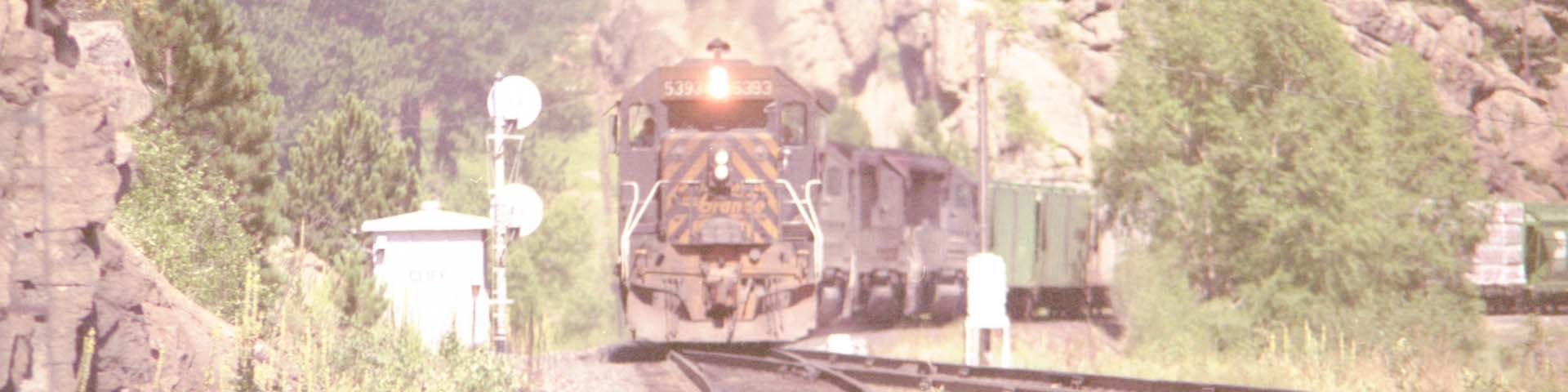
There are many surplus freight cars scattered about the San Luis Valley in Colorado. At some point circa 1980 (+/-) the railroad sold off hundreds of old boxcars, and the farmers and ranchers snapped them up for use as barns and such. I’ve gotten a few photos of these cars over time, but nothing lasts forever, so I’ve been meaning to be more proactive about recording them for posterity.
So when I came across one back in the trees behind the Dunes Oasis campground this month, I made a point to do a full walk-around. If nothing else, this should be of some value to modelers.
The subject is 50-foot plug-door boxcar no. 60698, built in February 1960 (making it barely older than me!). It wears the then-current silver-and-gold scheme, pretty flashy for freight equipment, and it’s one of my all-time favorite schemes. This car was part of an order of 115 such cars built by Pacific Car & Foundry. It’s an insulated boxcar, also known as an RBL, used for transporting goods that were sensitive to temperature extremes but not requiring actual refrigeration. (Information found in Jim Eager’s book.)
You can click the images to see the larger version.
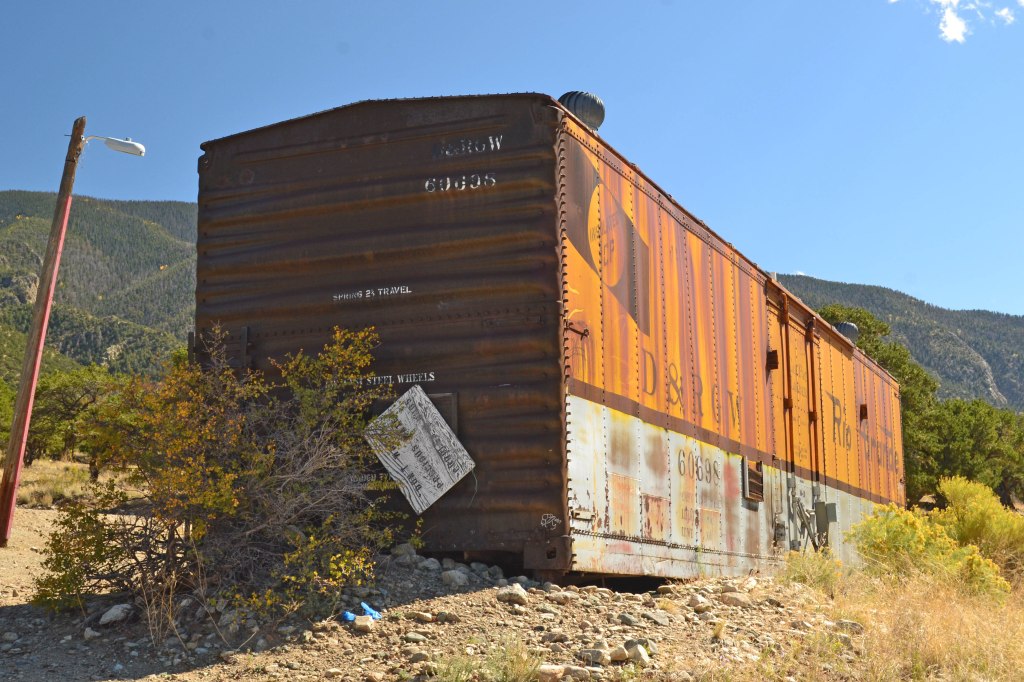
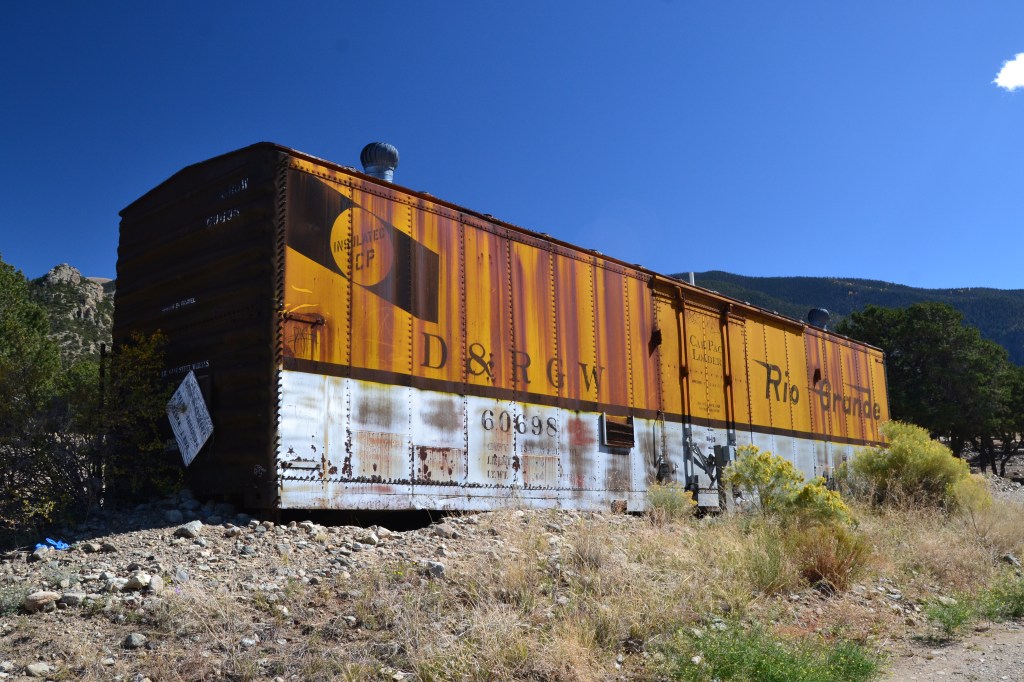
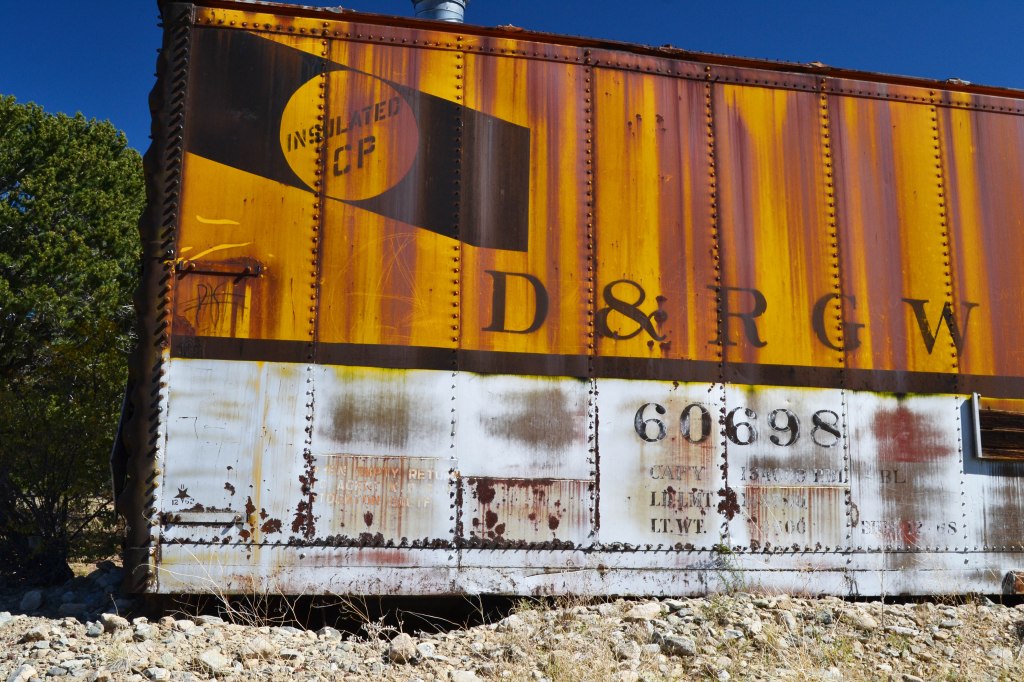
Starting from the northwest, here are three shots on the sunny (west, downhill) side. If you zoom in on the right-hand photo you can make out a stenciled instruction to return it when empty to the Western Pacific RR agent in Stockton, Cali. Evidently the car was under lease to the WP at some point.


Proceeding down this side of the car we get broader side views, and a close-up of some of the stencil marks. The sagebrush interfered with some of the views, unfortunately.


Coming around the south end, we get a nice sunny look at the end. Moving around counter-clockwise we get uphill of the car, and here’s where the real surprise hit me. The car is being used as a campground outhouse! (This is when I spotted the spinning ventilator hoods on each end.) Yes, one side for the gents, the other end for the ladies. I don’t know if there is plumbing inside or just pit toilets; the doors had security locks.

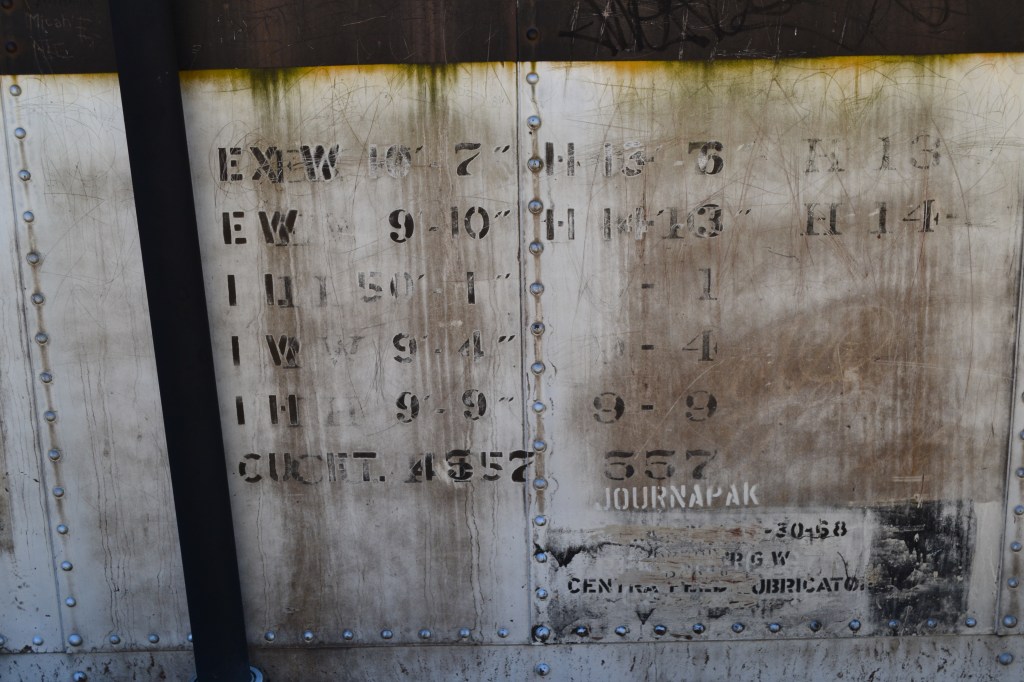
Here are a couple final views of the stencil data. The left image shows us the built-date and the KarTrak panel; the right picture gives us the dimensional data.
I must admit, of all the second-life purposes assigned to a piece of historic rolling stock, “outhouse” is not one I ever saw coming…

 Action Road